 Comparison Guides
⭐ Featured
Comparison Guides
⭐ Featured
Pistachio Benefits: Complete Evidence Guide for India (Pista) — 12 Proven Benefits
Complete guide to pistachio benefits India (pista) — 12 evidence-based benefits. 5 nut records: lowest GI (~15, 3 RCTs), highest lutein+zeaxanthin 2903mcg (eye health, 33× more than other nuts), 100% daily Vitamin B6 (mood, PMS RCT), highest potassium 1025mg (blood pressure RCT).
In this article: The 5 records pistachios hold among all nuts | Complete nutrition | 12 evidence-based benefits | Blood sugar — 3 RCTs | Cholesterol — meta-analysis | Blood pressure RCT | The "pistachio effect" on GI | Lutein + zeaxanthin for eyes | Gut microbiome | Male fertility | Weight management — the shell trick | Vitamin B6 and mood | Iranian vs California | Raw vs roasted vs salted | 7 Indian uses including Pista Kulfi | Dosage guide | Side effects | 12 FAQ
Pistachio Benefits: The Complete Evidence Guide for India (Pista)
Pistachios — called pista in Hindi, Marathi, Gujarati and most Indian languages — hold five nutritional records among all common nuts: highest protein, highest fibre, lowest glycaemic index, highest lutein and zeaxanthin content, and highest Vitamin B6. No other nut leads in this many categories simultaneously.
In India, pista is consumed in two very different contexts: as a garnish in mithai (pista barfi, pista kulfi, halwa), where it adds colour and texture, and as a snack, where it is typically eaten in small quantities. The mithai context means most Indians consume pista regularly but in sub-therapeutic amounts. This guide explains how much is meaningful, what the clinical evidence shows, and how to make pista a daily nutrition habit rather than an occasional garnish.
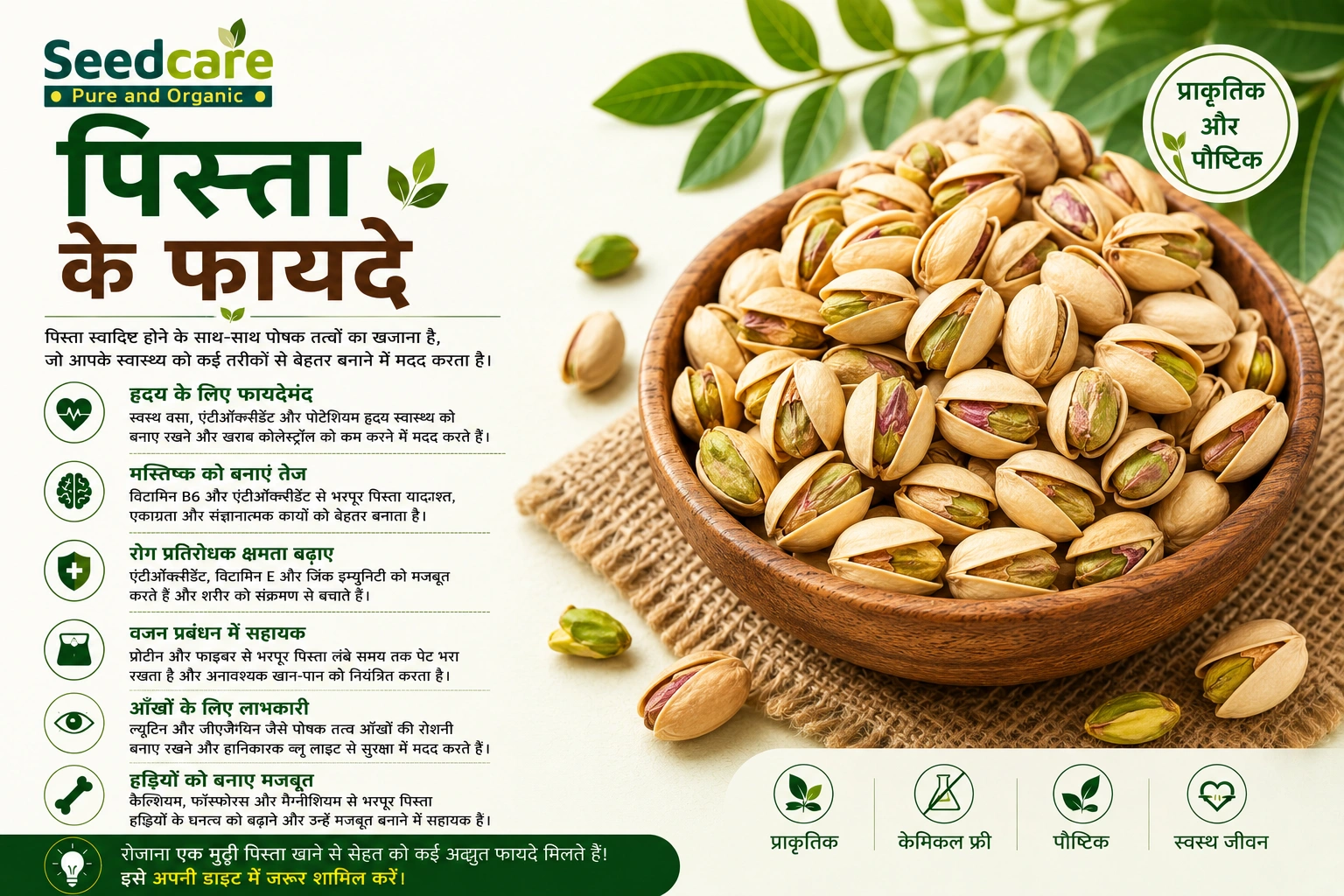
Hindi guide: पिस्ता के फायदे — Complete Hindi Guide.
The 5 Nutritional Records Pistachios Hold Among All Nuts
| Record | Value | Closest Competitor | Why It Matters |
|---|---|---|---|
| Lowest GI ✅ | ~15 | Walnuts ~15 (tied), Almonds ~15 | Safe for diabetics — verified in 3 RCTs |
| Highest lutein+zeaxanthin ✅ | 2,903mcg/100g | Pecans ~88mcg | Eye macular protection — 33× more than next nut |
| Highest protein ✅ | 20.2g/100g | Almonds 21.2g (very close) | Muscle, satiety, complete amino acid profile |
| Highest fibre ✅ | 10.6g/100g | Almonds 12.5g (slightly higher) | Gut health, cholesterol, blood sugar |
| Highest Vitamin B6 ✅ | 100% DV/100g | Walnuts ~25% | Unique — no other nut even comes close on B6 |
Pistachios: Complete Nutrition Profile
Source: USDA FoodData Central | Per 100g dry roasted pistachios (without shell):
| Nutrient | Amount per 100g | % Daily Value | Why It Matters |
|---|---|---|---|
| Calories | 562 kcal | — | 28g serving (49 nuts) = 157 kcal |
| Vitamin B6 (Pyridoxine) | 1.7mg | 100% ✅ | Unique — highest B6 of any nut. Serotonin, dopamine, PMS, immunity |
| Thiamine (B1) | 0.87mg | 72% ✅ | Energy, heart, nervous system — highest B1 nut |
| Copper | 1.3mg | 144% ✅ | Collagen, melanin, dopamine, SOD3, iron absorption |
| Phosphorus | 490mg | 70% ✅ | Bone, ATP energy production |
| Potassium | 1025mg | 29% ✅ | Highest potassium nut — blood pressure, heart rhythm, muscle |
| Manganese | 1.2mg | 52% | SOD2 antioxidant enzyme, bone matrix |
| Magnesium | 121mg | 29% | Insulin sensitivity, sleep, BP, ATP |
| Iron | 3.9mg | 22% | Blood formation — non-haem, pair with Vit C |
| Zinc | 2.2mg | 20% | Immunity, testosterone, skin |
| Selenium | 7.4mcg | 13% | Thyroid, GPx antioxidant |
| Folate | 51mcg | 13% | Cell division, pregnancy |
| Lutein + Zeaxanthin | 2,903mcg | Highest nut ✅ | Macular pigment — AMD and cataract prevention |
| Gamma-tocopherol (Vit E) | 22.6mg | Good | Lipid antioxidant — protective form of Vit E |
| Protein | 20.2g | 40% | Complete — all 9 essential amino acids |
| Dietary Fibre | 10.6g | 38% ✅ | Highest fibre nut — gut health, satiety, cholesterol |
| Monounsaturated fat (oleic) | 23.3g | Beneficial | Heart-protective — same fat as olive oil |
| Phytosterols | 214mg | High ✅ | Cholesterol absorption blockade |
| GI | ~15 | Lowest ✅ | Among the lowest GI foods available — 3 RCTs confirm |
12 Evidence-Based Benefits of Pistachios
1. Blood Sugar Control — Three Randomised Controlled Trials
Pistachios have more blood sugar RCT evidence than almost any other nut:
| Study | Design | Result |
|---|---|---|
| Journal of the American College of Nutrition 2010 | RCT — pistachios added to high-carb meals | Significantly reduced post-meal glucose and insulin response — the "second meal effect" (lower blood sugar at the next meal too) |
| European Journal of Clinical Nutrition 2011 | RCT in pre-diabetic adults | Fasting blood glucose, HbA1c and insulin resistance (HOMA-IR) all significantly improved after 3 months |
| Multiple mechanistic studies | In vitro and in vivo | Pistachios slow gastric emptying, reduce alpha-glucosidase activity, and the high fibre content flattens the glucose absorption curve |
- GI approximately 15 — one of the lowest GI foods available in India, lower than most vegetables
- Fibre (10.6g/100g): slows glucose absorption with every meal where pistachios are included
- Protein (20.2g): triggers incretin hormones (GLP-1) that improve insulin release and sensitivity
- Magnesium (29% DV): directly improves insulin receptor tyrosine kinase activity
- The "second meal effect": eating pistachios at one meal reduces glucose response at the next meal — a sustained metabolic benefit seen in multiple trials
2. Cholesterol Reduction — Meta-Analysis Evidence
American Journal of Clinical Nutrition 2009 — meta-analysis: pistachio consumption significantly reduced total cholesterol and LDL while maintaining or improving HDL. Three simultaneous mechanisms:
- Phytosterols (214mg/100g): competitively block cholesterol absorption at intestinal brush border — meta-analyses show 8-10% LDL reduction at 2g/day
- Oleic acid (MUFA, 23.3g): reduces LDL without lowering HDL — same mechanism as olive oil
- Gamma-tocopherol (Vit E): prevents LDL oxidation — only oxidised LDL deposits in arterial walls
- Fibre (10.6g): binds bile acids in the intestine → liver converts LDL to replace bile → blood LDL falls
3. Blood Pressure — Clinical Trial
Hypertension 2012 — RCT: two servings of pistachios daily for 4 weeks significantly reduced systolic blood pressure, particularly during stress, and improved peripheral vascular resistance. Mechanisms:
- Potassium (1,025mg — 29% DV): the primary dietary blood pressure mineral — the highest potassium of any nut. Potassium-to-sodium ratio is the most important dietary BP factor
- Magnesium (29% DV): relaxes arterial smooth muscle — independent BP-lowering mechanism
- Phytosterols: reduce arterial stiffness by decreasing cholesterol in vessel walls
- L-arginine (present in pistachio protein): precursor to nitric oxide → vasodilation
4. Eye Health — Highest Lutein and Zeaxanthin of Any Nut
JAMA Ophthalmology 2013: Regular nut consumption associated with 35% lower AMD risk. Pistachios contain 2,903mcg lutein and zeaxanthin per 100g — the highest of any nut by a very wide margin (pecans have 88mcg, the next highest). Lutein and zeaxanthin are the primary compounds in the macular pigment that protects central vision:
- Concentrate in the macula — the retinal region responsible for sharp vision and colour discrimination
- Filter blue light and UV radiation, protecting photoreceptors from oxidative damage
- Higher macular pigment density = lower AMD (age-related macular degeneration) and cataract risk
- Regular pistachio consumption measurably increases plasma lutein levels, which the eye then accumulates in the macula
| Nut (Lutein + Zeaxanthin per 100g) | Amount |
|---|---|
| Pistachios | 2,903mcg ✅ |
| Pecans | 88mcg |
| Walnuts | 9mcg |
| Almonds | 1mcg |
| Cashews | 22mcg |
5. Gut Microbiome — The Highest Fibre Nut
Journal of Agricultural and Food Chemistry 2012: Pistachio consumption significantly increased Bifidobacterium and Lactobacillus populations in the gut — the two most beneficial bacterial genera — more than almost any other nut tested.
- 10.6g fibre per 100g: the prebiotic fibre feeds beneficial bacteria, which produce short-chain fatty acids (butyrate) that reduce gut inflammation and lower colon cancer risk
- Unique prebiotic fibres: pistachios contain galactooligosaccharides and fructooligosaccharides — highly selective prebiotics that specifically feed Bifidobacterium
- Regular pistachio consumption measurably increases gut microbiome diversity — a key marker of gut and immune health
6. Weight Management — The Shell Trick
Appetite 2011 — the "pistachio principle": participants who ate in-shell pistachios consumed 41% fewer calories than those who ate pre-shelled, because the physical act of shelling slows eating speed and the empty shells provide a visual cue of consumption that triggers satiety.
- Protein (20.2g/100g): triggers GLP-1 and PYY satiety hormones for 3-4 hours
- Fibre (10.6g): slows gastric emptying, prolongs satiety, feeds gut bacteria that produce appetite-suppressing SCFAs
- Low GI (~15): no glucose spike-and-crash that drives hunger rebounds
- In-shell pistachios: always choose these for snacking — the shelling process slows eating and reduces caloric intake significantly
The 49-nut serving
28g of pistachios = approximately 49 nuts — more than any other nut in a standard serving. Because they are in-shell and require individual opening, 49 pistachios take significantly longer to eat than 20 almonds or 18 cashews. This "slow eating" mechanism is well-supported — pistachio eaters consistently show lower caloric intake per session than other nut consumers.
7. Vitamin B6 — Mood, PMS, and Brain
100% daily Vitamin B6 per 100g — no other nut provides this. RCT evidence: B6 supplementation reduces PMS symptoms (anxiety, irritability, depression, bloating) by approximately 50%. Mechanism:
- B6 is the direct cofactor for aromatic L-amino acid decarboxylase — the enzyme that produces both serotonin and dopamine from their precursor amino acids
- Without adequate B6, serotonin and dopamine synthesis is impaired regardless of tryptophan or tyrosine intake
- B6 additionally modulates oestrogen-driven prostaglandin production — specifically the prostaglandins that cause luteal phase breast tenderness and bloating in PMS
- India's largely cereal-based diet tends to be low in B6 — nuts are one of the better plant B6 sources, and pistachio leads all others
PCOS seed cycling Phase 2 (Days 15-28) specifically uses pistachios alongside sunflower seeds for B6 and Vit E luteal phase support. Full protocol: Seeds for PCOS India.
8. Heart Health — The Complete Picture
- Oleic acid (MUFA, 23.3g): reduces LDL without lowering HDL — the most favourable fat profile change
- Phytosterols (214mg): block intestinal cholesterol absorption
- Gamma-tocopherol: prevents LDL oxidation (atherogenic LDL is oxidised, not native LDL)
- Potassium (29% DV): lowers blood pressure — the most important dietary BP mineral
- Arginine: precursor to nitric oxide → endothelial vasodilation → improved arterial function
- Fibre: reduces bile acid reabsorption → liver uses LDL to synthesise replacement bile → blood LDL falls
9. Complete Protein and Muscle Health
- 20.2g protein per 100g — highest or tied for highest of any common nut
- Complete amino acid profile: contains all 9 essential amino acids, including leucine (the primary muscle protein synthesis trigger)
- Branched-chain amino acids (BCAAs): pistachios have relatively high leucine, isoleucine and valine content — relevant for post-workout muscle repair
- Arginine: supports nitric oxide production during exercise — improves blood flow to working muscles
10. Male Fertility — Antioxidant Protection of Sperm
Journal of Urology 2011 — clinical study in men with erectile dysfunction: pistachio consumption for 3 weeks significantly improved erectile function scores, sexual desire, satisfaction, orgasmic function and overall sexual satisfaction.
- Arginine → nitric oxide: directly supports penile vasodilation (the same mechanism as PDE5 inhibitors, though considerably less potent)
- Antioxidants (gamma-tocopherol, polyphenols, lutein): protect sperm DNA from oxidative damage — sperm are highly vulnerable to ROS due to their high PUFA content
- Zinc (20% DV): testosterone synthesis and sperm motility
- Selenium (13% DV): GPx5 in epididymis protects sperm during maturation
11. Bone Strength
- Phosphorus (70% DV): forms hydroxyapatite crystal structure of bone alongside calcium
- Magnesium (29% DV): activates Vitamin D to its functional form for calcium absorption
- Copper (144% DV): activates lysyl oxidase — cross-links collagen in bone matrix
- Manganese (52% DV): cofactor for chondroitin sulphate in cartilage and osteocalcin in bone
- Vitamin K (present): activates osteocalcin to anchor calcium into bone matrix
12. Skin, Hair, and Anti-Ageing
- Copper (144% DV): tyrosinase (melanin for hair and skin pigment) and lysyl oxidase (collagen cross-linking for firmness) — same dual copper role as cashews
- Gamma-tocopherol (Vit E): lipid antioxidant protecting skin cell membranes from UV-induced peroxidation
- Lutein and zeaxanthin: accumulate in skin as well as eyes — provide UV protection layer at skin level
- Zinc (20% DV): sebum regulation, collagen support, DHT reduction for hair loss
- B6 (100% DV): niacinamide-pathway support for skin barrier and hyperpigmentation
Iranian Pistachios vs Other Varieties
| Variety | Origin | Shape | Taste | Availability in India |
|---|---|---|---|---|
| Fandoghi (Round) ✅ | Iran | Small, round | Classic pistachio — slightly sweet, earthy | Most common Indian market variety |
| Ahmad Aghaei (Long) ✅ | Iran | Long, thin | Milder, creamier, more oil | Premium Iranian — Seedcare carries this |
| Kalle Ghouchi (Jumbo) | Iran | Very large, round | Rich, nutty | Premium gifting — large size |
| California (USA) | USA | Medium, elongated | Uniform, milder | Less common in India — typically roasted salted |
| Sicilian | Italy | Small, deep green | Intensely flavoured | Very rare in India — premium import |
Raw vs Roasted vs Salted Pistachios
| Form | Nutrients | Taste | GI | Best For |
|---|---|---|---|---|
| Raw (unroasted, unsalted) | 100% | Mild, slightly green, fresh | ~15 | Cooking, grinding, maximum nutrition |
| Dry roasted, unsalted ✅ | ~90-95% | Nutty, rich, most satisfying ✅ | ~15 | Daily snacking — best taste + nutrition balance |
| Dry roasted, lightly salted | ~90% | Enhanced, slightly savoury | ~15 | Snacking — fine for most; limit if hypertensive |
| Heavily salted commercial | ~90% | Addictive — salt masks flavour | ~18 | Avoid — sodium often very high per serving |
| In-shell (any roast) | 100% | Same as shelled | ~15 | Best for weight management ✅ — shell slows eating |
Always choose in-shell for weight management
The pistachio shell study is compelling: in-shell pistachio eaters consumed 41% fewer calories than pre-shelled eaters at the same satisfaction level. The empty shells create a visual record of how much you have eaten — triggering satiety signals. For daily snacking, always choose in-shell pistachios over pre-shelled.
7 Indian Uses for Pistachios
1. Direct Snacking — The 49-Nut Serving
28g in-shell pistachios (approximately 49 nuts in shell = ~23 actual nut kernels). 157 kcal, 5.7g protein, 47mg potassium, 2.8mg copper, 812mcg lutein+zeaxanthin. The visual cue of the shells reduces total caloric intake vs any other nut. Best afternoon snack for blood sugar stability (GI ~15).
2. Pista Kulfi (Traditional Indian Ice Cream)
| Ingredient | Amount |
|---|---|
| Full-fat milk | 1 litre |
| Pistachios (blanched, finely ground) | 50g |
| Sugar or jaggery | 60g |
| Cardamom | 1 tsp |
| Saffron (soaked in 2 tbsp warm milk) | few strands |
| Additional pistachios (roughly chopped, for texture) | 20g |
Reduce milk to half by simmering on medium heat (45 min), stirring frequently. Add sugar, saffron, cardamom and ground pistachio. Cool completely. Pour into kulfi moulds. Freeze 6-8 hours. The most culturally authentic pistachio preparation in India — rich, fragrant, naturally green. The pistachio protein and fat make kulfi far more filling than ice cream. Each kulfi provides protein, lutein, B6 and copper.
3. Pista Barfi
| Ingredient | Amount |
|---|---|
| Pistachios (raw, ground to paste) | 200g |
| Sugar syrup (one-string) | 100g sugar + 60ml water |
| Cardamom | ½ tsp |
| Ghee (for greasing) | 1 tsp |
| Silver vark (optional) | — |
Cook sugar to one-string. Add pistachio paste, cardamom. Stir on low until mixture leaves sides (5-7 min). Turn onto greased plate, flatten with spatula, cut into diamonds when cool. Premium Indian festival sweet — intensely flavoured. Lower added sugar than most mithai because pistachio paste is naturally flavourful. Protein 4g+ per piece, lutein in every bite.
4. Garnish on Halwa, Kheer, Shrikhand
Blanch 20g pistachios in hot water (2 min), peel skin, slice thin lengthwise. Scatter on any Indian dessert just before serving. The classic use — but make sure you eat the garnish, not just look at it. The green colour indicates chlorophyll and lutein content. Eating the full garnish on a portion of gajar halwa adds meaningful lutein without changing the dish character.
5. Pista Milk (Night Drink)
Blend 15g raw pistachios (soaked 2 hours) + 250ml warm milk + pinch cardamom + saffron strand. Blend smooth, drink before bed. The tryptophan + B6 + magnesium combination in pistachios supports serotonin → melatonin conversion for better sleep quality. Better than warm plain milk alone for insomnia. Traditional Ayurvedic pista doodh.
6. In Rice or Biryanis
10-15g roughly chopped pistachios added in the last 5 minutes of cooking biryani or pulao. Adds texture, colour, protein, and the phytosterol-fibre combination that reduces the GI of the rice meal — meaningful blood sugar benefit by combining high-GI rice with low-GI pistachios in the same dish.
7. Morning Nut Mix (Brain Food)
10g pistachios + 5 soaked almonds + 2 soaked walnuts + 3 cashews, eaten on empty stomach. The classic Ayurvedic morning nut protocol — pistachios bring B6 + lutein, almonds add Vitamin E, walnuts contribute omega-3, cashews add copper + tryptophan. Together these cover every major brain-supportive nutrient. Takes 60 seconds to prepare the night before.
Pistachios vs Other Nuts
| Property | Pistachios | Almonds | Cashews | Walnuts |
|---|---|---|---|---|
| GI | ~15 ✅ | ~15 | ~25 | ~15 |
| Protein | 20.2g ✅ | 21.2g | 18.2g | 15.2g |
| Fibre | 10.6g ✅ | 12.5g | 3.3g | 6.7g |
| Vitamin B6 | 100% DV ✅ | ~10% | 25% | ~25% |
| Lutein+Zeaxanthin | 2,903mcg ✅ | 1mcg | 22mcg | 9mcg |
| Potassium | 29% DV ✅ | 13% | 10% | 13% |
| Copper | 144% DV | 50% | 244% | 67% |
| Vitamin E | 22mg | 26mg ✅ | 5% | 2% |
| Omega-3 | Very low | Very low | Very low | 9.1g ✅ |
| Best for | Blood sugar, GI, eyes (lutein), B6, gut fibre, weight | Vitamin E, skin | Copper, iron, mood | Omega-3, brain, DHA |
Daily Dosage Guide
| Goal | Daily Amount | Form | When |
|---|---|---|---|
| General health | 28-30g (49 in-shell nuts) | In-shell, dry roasted | Afternoon snack or with meal |
| Blood sugar (diabetics) | 28g before meals | Any, unsalted | GI ~15 — see full diabetics guide |
| Eye health (lutein) | 28-30g | Any form | With fat (ghee, dahi) for carotenoid absorption |
| Weight management | 28g measured | In-shell ✅ — critical | 41% fewer calories vs pre-shelled (RCT) |
| Mood and PMS (B6) | 30-40g | Any, unsalted | Daily consistency — B6 effect is cumulative |
| Heart health | 56g (two servings) | Any unsalted | BP RCT used two daily servings |
| Gut health | 28-30g | Any form | Consistent daily — prebiotic effect needs weeks |
| Cholesterol reduction | 56g | Any unsalted | 4+ weeks for measurable LDL change |
| Male health | 30-40g | Any | Arginine + antioxidant — 3+ weeks for benefit |
| Children (5+) | 10-15g (15-20 nuts) | Lightly salted is fine | Morning or as snack |
Side Effects and Precautions
| Concern | Detail | Who | Action |
|---|---|---|---|
| Caloric density | 562 kcal/100g — but 28g serving with in-shell slows eating | Weight management | Always measure; in-shell format is the best natural portion control |
| Pistachio allergy | Tree nut allergy — cross-reactive with cashews (Anacardiaceae family) | Anyone with cashew allergy | Test cautiously — cashew and pistachio share allergen proteins |
| High potassium | 1025mg/100g — meaningful for people with hyperkalemia | Chronic kidney disease | Limit to 15g if prescribed low-potassium diet |
| Salted varieties | Commercial salted pista often has very high sodium | Hypertensive | Choose unsalted or lightly salted only |
| Fructan sensitivity | Pistachios are high-FODMAP (fructans) — can trigger IBS symptoms in sensitive individuals | IBS | Limit to 10-15 nuts during sensitive periods; properly managed IBS can tolerate 28g |
| Aflatoxin (poor storage) | Pistachios can harbour aflatoxin if improperly stored in humid conditions | Anyone | Buy FSSAI certified; discard any with visible mould or bitter taste |
Frequently Asked Questions
What are the main benefits of pistachios?
Pistachios hold 5 nut records: lowest GI (~15), highest lutein+zeaxanthin (2,903mcg — eye health), highest Vitamin B6 (100% DV — mood, PMS), highest potassium (1,025mg — blood pressure) and among the highest protein (20.2g). 12 evidence-based benefits include 3 blood sugar RCTs, cholesterol meta-analysis, blood pressure RCT, gut microbiome improvement, and male fertility clinical data. Hindi guide: पिस्ता के फायदे.
How many pistachios per day?
28g daily (approximately 49 in-shell nuts = 23 shelled kernels) = 157 kcal, 5.7g protein, 2.9g fibre, 100% daily B6 from this serving alone. For heart health: two servings (56g) used in the BP RCT. For weight management: always eat in-shell — the shell-opening slows eating and reduces caloric intake by 41% vs pre-shelled (clinical trial).
Are pistachios good for diabetics?
Yes — among the best nuts for diabetics. Three separate RCTs confirm pistachios improve blood sugar: GI ~15 (one of the lowest foods overall), fibre (10.6g) slows glucose absorption, and the "second meal effect" reduces blood sugar at the next meal too. European Journal of Clinical Nutrition 2011 — 3-month RCT in pre-diabetics: significant improvements in fasting glucose, HbA1c and HOMA-IR. Full guide: Dry Fruits for Diabetics India.
Are pistachios good for eyes?
Yes — more than any other nut. Pistachios contain 2,903mcg lutein+zeaxanthin per 100g — 33× more than pecans (the next highest nut). Lutein and zeaxanthin form the macular pigment that protects central vision against AMD and cataracts. Regular pistachio consumption measurably increases plasma zeaxanthin and lutein levels within weeks. For people over 50 or with AMD family history, pistachios are the most targeted dietary intervention among nuts.
Why do pistachios have a green colour?
The green colour of pistachios comes from chlorophyll in the nut — the same photosynthetic pigment in plants. The deeper the green, the higher the chlorophyll and lutein content. Vibrant green pistachios are fresher and more nutritious. Yellowing or browning indicates age, improper storage, or excessive roasting that has degraded these compounds. When buying: bright, vivid green = fresh and nutritionally intact.
Pistachios vs almonds — which is better?
Pistachios are better for: blood sugar (GI ~15, 3 RCTs), lutein/zeaxanthin (2,903mcg vs 1mcg — eye health), Vitamin B6 (100% vs ~10% DV), potassium (29% vs 13%), fibre (10.6g vs 12.5g — similar), gut health. Almonds are better for: Vitamin E (26mg vs 22mg), calcium (7% vs 2% DV), and they are softer when soaked. Neither is universally better — eat both.
Are pistachios good for weight loss?
Yes — better than most nuts for weight management. Three reasons: (1) GI ~15 — no glucose spike-and-crash that drives hunger; (2) Protein 20.2g + fibre 10.6g — strong satiety hormone trigger; (3) The shell effect: RCT 2011 — in-shell pistachio eaters consumed 41% fewer calories than pre-shelled eaters. Always choose in-shell pistachios for snacking. Full weight loss seed and nut guide: Best Seeds for Weight Loss India.
Are pistachios good for skin?
Yes — specifically for ageing skin and skin tone. Copper (144% DV) activates tyrosinase (melanin for even skin tone) and lysyl oxidase (collagen cross-linking for firmness). Gamma-tocopherol (Vit E) protects skin cell membranes from UV oxidation. Lutein and zeaxanthin also accumulate in skin, providing UV protection. B6 (100% DV) supports skin barrier function. Results take 8-12 weeks of consistent daily consumption.
Can pregnant women eat pistachios?
Pistachios are safe and beneficial during pregnancy. Folate (13% DV) contributes to neural tube formation. Protein (20.2g) provides essential amino acids for foetal development. Iron (22% DV) supports blood volume expansion. Magnesium prevents premature contractions. B6 reduces nausea in early pregnancy (evidence-backed use). 28-30g daily is safe throughout — mention to your OB/GYN.
Why are pistachios expensive in India?
Most pistachios in India are imported — primarily from Iran and the USA. Import duties, logistics, and the relatively low yield of pistachio trees (they take 7-10 years to produce full crops) make them naturally expensive. Iranian Fandoghi (small round) is the most affordable variety available in India. Premium long (Ahmad Aghaei) and jumbo varieties cost more. Buying in bulk (500g-1kg) from Seedcare significantly reduces per-100g cost.
Are salted pistachios healthy?
Lightly salted dry roasted pistachios are fine for most people — the nutritional profile is essentially identical to unsalted (B6, lutein, fibre, protein all unchanged). The concern is sodium: commercial heavily-salted pistachios can have 600-900mg sodium per 100g, which is significant for hypertensive individuals (who are already the people most likely to benefit from pistachio's blood pressure-lowering properties). For hypertensives: choose unsalted pistachios specifically.
Where to buy good quality pistachios in India?
Seedcare Iranian Pistachios — premium grade, FSSAI certified, vibrant green, lightly roasted or raw. 250g to 1kg at store.seedcare.in. When buying: vivid green colour (chlorophyll + lutein intact), split shells (naturally split = properly ripened), no discolouration or mould, FSSAI certification. Avoid: yellowed, overly dark or oddly coloured nuts, and any with a rancid or bitter taste. All nuts →.
49 Nuts. The Best Afternoon Snack in India.
No other nut gives you 49 pieces in a 28g serving. No other nut gives you 100% daily B6 in that serving. No other nut gives you 2,903mcg of macular-protective lutein per 100g. Three blood sugar RCTs. One blood pressure RCT. A cholesterol meta-analysis. The in-shell eating mechanism that reduces caloric intake by 41%. Pista is not just a mithai garnish.
Seedcare Iranian Pistachios — in-shell, dry roasted or raw, FSSAI certified. All nuts →.
More from Seedcare
Related Articles