 Comparison Guides
⭐ Featured
Comparison Guides
⭐ Featured
Cashews Health Benefits: Complete Evidence Guide for India (Kaju) — 12 Proven Benefits
Complete guide to cashew benefits India (kaju) — 12 evidence-based benefits: copper 244% DV (highest nut — collagen, dopamine, melanin, iron utilisation), blood sugar (RCT in T2D, GI ~25 lowest nut), heart health (oleic acid + phytosterols + magnesium), mood and sleep (tryptophan 252mg), anaemia (iron + copper combination), bone, immunity, eye health, weight management.
In this article: Busting the "cashews cause weight gain" myth | Complete nutrition | 12 evidence-based benefits | Copper — the most important cashew nutrient | Heart health | Blood sugar (RCT in T2D) | Bone and joint health | Mood and brain (tryptophan) | Anaemia | Eye health | Skin and hair | Male health | W240 vs W180 vs W320 grade guide | Raw vs roasted vs salted | 7 Indian uses | Dosage | Side effects | Cashews vs other nuts | 12 FAQ
Cashews Health Benefits: The Complete Evidence Guide for India (Kaju)
India is the world's largest cashew exporter and one of its largest consumers. Kaju is in every Indian sweet shop, every mithai box, every biryani, every Diwali gift hamper. It is the most culturally embedded nut in Indian food culture — and yet it carries an undeserved reputation for causing weight gain.
This reputation is based on the fact that cashews are calorie-dense (553 kcal/100g). That fact is true. The conclusion drawn from it — that cashews cause weight gain — is not. New England Journal of Medicine, long-term nut study: people who regularly eat nuts (including cashews) weigh less and have lower waist circumferences than non-nut eaters, even accounting for total calorie intake. The mechanism: high protein and MUFA fat both trigger satiety hormones that reduce subsequent caloric intake.
Beyond the weight myth, cashews have specific nutritional strengths that most people are unaware of. The copper content (111% daily value per 100g) makes cashews the most copper-rich common nut — relevant for collagen synthesis, melanin production, dopamine activity, and iron utilisation. This guide covers all 12 evidence-based benefits, the grade guide for buying cashews in India, and how to use them practically every day.
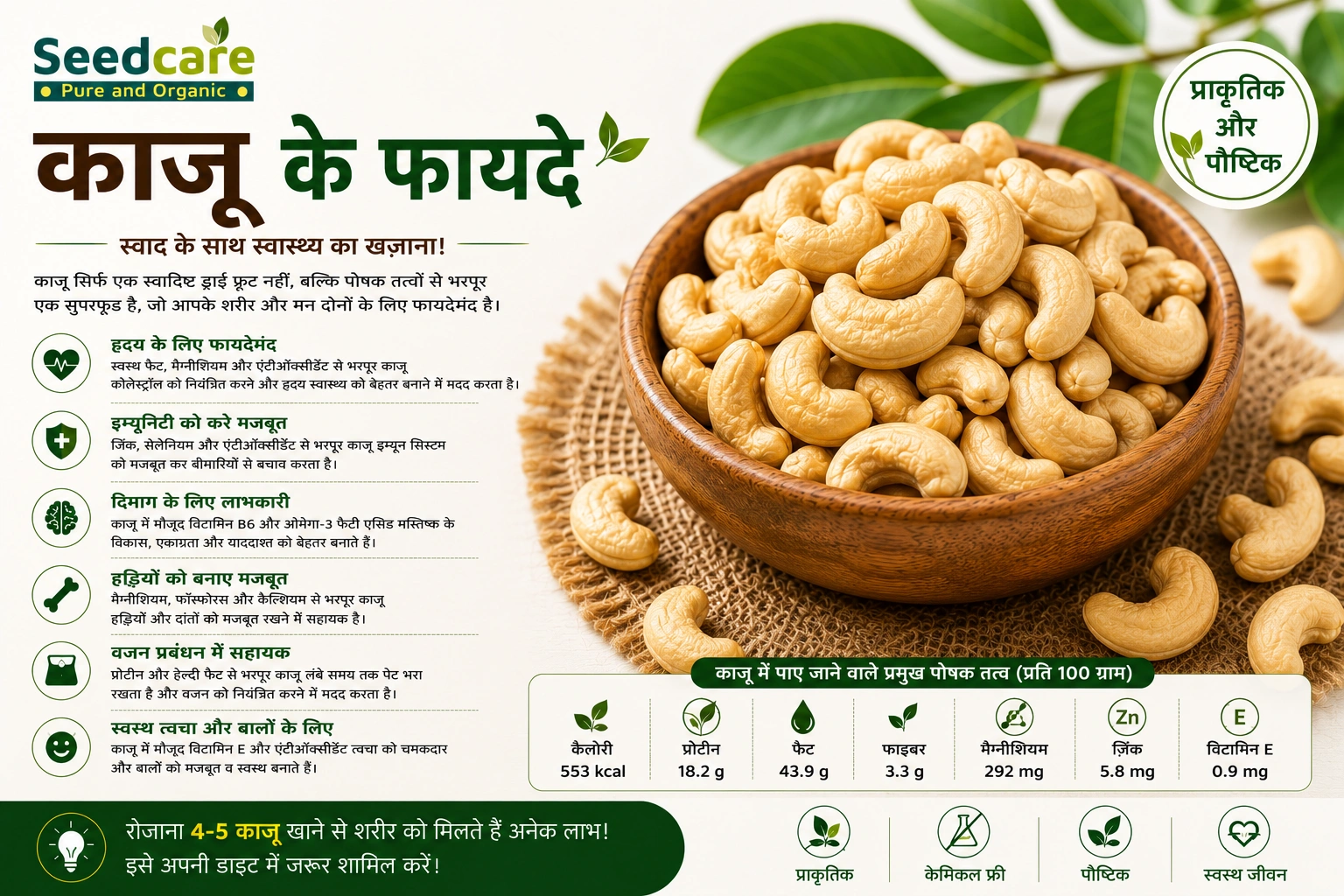
Hindi guide: काजू के फायदे — Complete Hindi Guide.
Cashews: Complete Nutrition Profile
Source: USDA FoodData Central | Per 100g raw cashews:
| Nutrient | Amount per 100g | % Daily Value | Why It Matters |
|---|---|---|---|
| Calories | 553 kcal | — | 28g serving (18 cashews) = 157 kcal |
| Copper | 2.2mg | 244% ✅ | Highest common nut source — collagen, dopamine, melanin, SOD3, iron absorption |
| Magnesium | 292mg | 69% ✅ | Insulin sensitivity, BP, sleep, ATP energy, 400+ enzyme reactions |
| Manganese | 1.66mg | 72% ✅ | SOD2 antioxidant, bone matrix, cartilage |
| Phosphorus | 593mg | 85% ✅ | Bone mineralisation, ATP energy |
| Zinc | 5.6mg | 51% ✅ | Immunity, testosterone, skin |
| Iron | 6.7mg | 37% ✅ | Blood formation — works best with copper present |
| Selenium | 19.9mcg | 36% | Thyroid, GPx antioxidant, immunity |
| Thiamine (B1) | 0.42mg | 35% | Energy, nervous system, heart function |
| Vitamin B6 | 0.42mg | 25% | Serotonin + dopamine synthesis, PMS, immunity |
| Folate | 69mcg | 17% | Cell division, pregnancy (neural tube) |
| Vitamin K | 34.1mcg | 28% | Blood clotting, bone mineralisation (osteocalcin) |
| Protein | 18.2g | 36% | Complete — all essential amino acids including tryptophan |
| Tryptophan | High (252mg/100g) | Unique ✅ | → Serotonin → Melatonin: mood regulation, sleep quality |
| Monounsaturated fat (oleic acid) | 23.8g | Beneficial | Same fat as olive oil — heart-protective LDL reduction |
| Saturated fat | 9.2g | Moderate | Stearic acid dominant — neutral to LDL (unlike palmitic acid) |
| Phytosterols | 158mg | Moderate | LDL cholesterol absorption blockade |
| Lutein + Zeaxanthin | 22mcg | Present | Eye macular protection |
| GI | ~25 | Very low ✅ | Lowest GI of any common nut — excellent for diabetics |
The copper-iron connection
Cashews are unusually rich in both copper (244% DV) and iron (37% DV). This combination is significant: iron cannot be absorbed and utilised without copper. Copper is required for ceruloplasmin (the protein that mobilises iron from storage into blood), ferroxidase enzyme activity, and iron incorporation into haemoglobin. Eating iron-rich foods without copper is less effective. Cashews provide both together — making them particularly valuable for iron deficiency anaemia.
12 Evidence-Based Benefits of Cashews
1. Heart Health — MUFA, Phytosterols and Magnesium
Nutrients 2017 — review of nut consumption and cardiovascular outcomes: regular cashew consumption is associated with reduced LDL cholesterol, reduced total cholesterol, and improved HDL:LDL ratio. Three mechanisms:
- Oleic acid (MUFA, 23.8g/100g): the primary fat in olive oil — reduces LDL without lowering HDL. MUFA replaces saturated fat in the diet → measurable LDL reduction
- Phytosterols (158mg/100g): block cholesterol absorption in the intestinal brush border. Meta-analyses show 8-10% LDL reduction at 2g/day phytosterols
- Magnesium (69% DV): relaxes arterial smooth muscle → reduces blood pressure; supports normal heart rhythm; prevents arterial spasm
- Stearic acid (the dominant saturated fat in cashews): unlike palmitic acid, stearic acid is neutral to blood cholesterol — it does not raise LDL
| Fat Type in Cashews | Amount | Effect on Heart |
|---|---|---|
| Oleic acid (MUFA) | 23.8g | ✅ Reduces LDL — heart-protective (same as olive oil) |
| Linoleic acid (omega-6) | 7.8g | ✅ Reduces LDL at appropriate amounts |
| Stearic acid (SFA) | 6.0g | ➡️ Neutral — does not raise LDL (unlike palmitic acid) |
| Palmitic acid (SFA) | 3.0g | ⚠️ May raise LDL at high intake — but low amount in cashews |
2. Blood Sugar — The Lowest GI Nut
Journal of Nutrition 2017 — RCT in Type 2 diabetics: cashew consumption significantly improved insulin sensitivity and reduced fasting blood glucose vs control group. Key mechanisms:
- GI approximately 25 — the lowest of any common nut. 28g cashews produces minimal post-meal glucose impact
- Magnesium (69% DV): directly improves insulin receptor tyrosine kinase activity — the most common micronutrient deficiency in Indian Type 2 diabetics
- Anacardic acid (unique to cashews): preliminary evidence for alpha-glucosidase inhibition — reduces starch digestion rate
- High protein (18.2g) slows gastric emptying — reduces post-meal glucose rise from other foods in the same meal
For complete low-GI dry fruit guide: Dry Fruits for Diabetics India.
3. Copper — The Most Underrated Cashew Benefit
Nutrients 2014: Copper is a cofactor for more enzymes than almost any other mineral. At 244% DV per 100g, cashews are the richest common nut source. Five major functions:
| Copper Function | Enzyme/Process | Why It Matters Practically |
|---|---|---|
| Collagen synthesis | Lysyl oxidase | Cross-links collagen and elastin — skin firmness, joint cartilage, arterial wall integrity |
| Melanin production | Tyrosinase | Skin and hair pigmentation — grey hair prevention, skin tone evenness |
| Dopamine synthesis | Dopamine β-hydroxylase | Converts dopamine to norepinephrine — focus, mood, stress response |
| Iron utilisation | Ceruloplasmin + ferroxidase | Mobilises stored iron into bloodstream — copper deficiency causes functional iron deficiency even with adequate iron intake |
| Antioxidant defence | SOD3 (extracellular) | Protects blood vessel walls and immune cells from oxidative damage |
4. Bone and Joint Health
- Phosphorus (85% DV): forms the hydroxyapatite crystal matrix in bone alongside calcium — bone is approximately 70% hydroxyapatite by dry weight
- Magnesium (69% DV): activates Vitamin D to its functional form (1,25-dihydroxyvitamin D) that regulates calcium absorption — without magnesium, Vitamin D supplements are less effective
- Copper (244% DV): activates lysyl oxidase — cross-links collagen in bone tissue and joint cartilage for structural integrity
- Manganese (72% DV): essential cofactor for chondroitin sulphate synthesis in cartilage and osteocalcin activation in bone matrix
- Vitamin K (28% DV): activates osteocalcin — the protein that anchors calcium into bone matrix (without Vitamin K, dietary calcium cannot be properly incorporated into bone)
The underappreciated joint benefit
The copper in cashews activates lysyl oxidase, which cross-links collagen fibers in joint cartilage. Copper deficiency causes cartilage that is structurally weak — contributing to joint pain and early osteoarthritis. Indians over 50 with joint pain are often copper-deficient without knowing it. 30-40g cashews daily provides substantial copper alongside the collagen-supporting minerals.
5. Mood, Brain, and Sleep — Tryptophan
Journal of Psychiatry and Neuroscience 2011: Tryptophan is the precursor to serotonin (mood regulation, wellbeing) and melatonin (sleep). Cashews contain 252mg tryptophan per 100g — one of the higher plant food sources.
- Tryptophan → 5-HTP → Serotonin: the primary mood-stabilising neurotransmitter. Low serotonin is associated with depression, anxiety and emotional instability
- Serotonin → Melatonin: evening conversion in the pineal gland. Adequate tryptophan intake supports better sleep quality and onset
- Copper (244% DV): cofactor for dopamine β-hydroxylase — converts dopamine to norepinephrine, supporting focus and alertness
- Magnesium (69% DV): GABA receptor activation — the "calming" neurotransmitter that reduces anxiety and promotes relaxed alertness
- Vitamin B6 (25% DV): direct cofactor for both serotonin and dopamine synthesis enzymes
The afternoon snack for mood
28g cashews mid-afternoon provides tryptophan, magnesium and B6 together — the combination most likely to support serotonin levels through the late afternoon when cortisol dips and mood often follows. More effective than coffee (which depletes serotonin through cortisol) and nutritionally superior to any processed snack.
6. Anaemia Prevention — The Iron-Copper Combination
- Iron (37% DV per 100g): meaningful non-haem iron for vegetarians. India has the highest iron deficiency anaemia burden globally — affecting approximately 500 million people
- Copper (244% DV): ceruloplasmin (copper-dependent) is required to mobilise iron from intestinal cells and liver storage into the blood. Copper deficiency causes functional iron deficiency — anaemia that persists even with adequate dietary iron because the iron cannot be moved into blood
- Vitamin C pairing: eating cashews alongside a Vitamin C source (lemon water, orange, amla) converts non-haem iron to the more absorbable ferrous form — increases iron absorption by 2-3×
- Manganese (72% DV): supports the mitochondrial antioxidant defence in red blood cell precursors
Why iron-only interventions often fail
India spends billions annually on iron supplementation for anaemia, yet prevalence remains high. One underappreciated reason: copper deficiency prevents iron utilisation even when iron is adequate. Cashews provide both iron and the copper needed to use it — making them more effective than iron-only foods for anaemia prevention.
7. Eye Health — Lutein and Zeaxanthin
JAMA Ophthalmology 2013 — large prospective cohort: regular nut consumption (including cashews) associated with 35% lower risk of late AMD (age-related macular degeneration). Cashews contain lutein and zeaxanthin (22mcg/100g) — the two carotenoids that form the macular pigment protecting central vision.
- Zeaxanthin and lutein concentrate in the macula — the part of the retina responsible for sharp central vision
- They act as natural UV and blue-light filters, protecting photoreceptors from oxidative damage
- Higher macular pigment density correlates strongly with lower AMD risk
- Zinc (51% DV): required for retinal metabolism — zinc deficiency is a documented cause of night blindness
8. Skin and Hair
- Copper (244% DV): activates tyrosinase (melanin for hair and skin pigment) and lysyl oxidase (collagen cross-linking for skin firmness) — the two most important mineral-dependent skin processes
- Zinc (51% DV): regulates sebum production (acne), supports keratin synthesis (hair and nail strength), reduces DHT-driven hair thinning
- Oleic acid (MUFA): supports skin cell membrane integrity, reduces transepidermal water loss
- Selenium (36% DV): GPx enzyme protects skin cell membranes from lipid peroxidation
9. Male Hormonal Health
- Zinc (51% DV): direct testosterone synthesis — zinc is required at two steps in the steroidogenesis pathway
- Zinc additionally inhibits aromatase — preventing testosterone-to-oestrogen conversion
- Magnesium (69% DV): reduces sex hormone-binding globulin (SHBG) — freeing more testosterone to be biologically active
- Selenium (36% DV): GPx5 protects sperm during epididymal maturation from oxidative damage
- Tryptophan → serotonin: balances cortisol-driven testosterone suppression from chronic stress
10. Immunity — Zinc, Copper, Selenium Triple
Pediatrics 2012: Cashews provide the zinc-copper-selenium combination that covers three distinct immunity mechanisms:
- Zinc (51% DV): T-cell production, NK cell activation, antibody synthesis — the most critical mineral for adaptive immunity
- Copper (244% DV): SOD3 extracellular antioxidant, immune cell maturation, NK cell cytotoxicity enhancement
- Selenium (36% DV): GPx protects immune cells during the oxidative burst of pathogen destruction; interferon-γ and NK cell activation
- Magnesium (69% DV): reduces chronic inflammation that suppresses immune function
11. Weight Management — Busting the Fat Myth
NEJM long-term diet study: regular nut consumers gain less weight over 20 years than nut avoiders despite nuts being calorie-dense. Why:
- Protein (18.2g/100g) triggers GLP-1 and PYY satiety hormones for 3-4 hours after eating
- MUFA fat slows gastric emptying — prolonged satiety
- A portion of cashew fat (approximately 10-15%) passes through the digestive system without being absorbed — cell walls trap fat in intact nut pieces that resist digestion
- Magnesium reduces cortisol — the primary hormone driving abdominal fat storage
- The "cashews cause weight gain" belief comes from treating them as an unlimited snack. 28g (18 cashews) = 157 kcal — as a measured portion, this is a weight-management-friendly snack
Complete weight management guide: Best Seeds for Weight Loss India.
12. Pregnancy and Foetal Development
- Folate (17% DV): contributes to neural tube formation — critical in first trimester
- Iron (37% DV): blood volume expands 50% in pregnancy — iron demand increases significantly
- Magnesium (69% DV): prevents premature uterine contractions; supports foetal bone development
- Copper (244% DV): essential for foetal connective tissue and blood vessel development
- Zinc (51% DV): foetal cell division — zinc is required at every stage of DNA replication
- Protein (18.2g): all essential amino acids for foetal tissue building
The Indian Cashew Grade Guide: W240, W320, W180 and More
Indian cashews are graded by the number of kernels per pound. "W" stands for "whole" and the number indicates how many whole cashews fit in one pound (454g).
| Grade | Kernels per pound | Size | Price | Best Use |
|---|---|---|---|---|
| W180 | ≤180 | Very large — jumbo | Premium +++ | Gift boxes, special occasions |
| W210 | 180-210 | Large | Premium ++ | Premium gifts, direct eating |
| W240 ✅ | 210-240 | Large-medium — sweet spot | Premium ✅ | Best eating, daily use, gifts — best flavour/value |
| W320 | 280-320 | Medium — most common | Standard | Everyday snacking, cooking |
| W400 | 320-400 | Small | Economy | Cooking, mithai, ground preparations |
| W450 | 400-450 | Very small | Economy | Grinding, cashew butter, cooking only |
| JH/SWP | Broken pieces | Pieces | Cheapest | Cashew milk, chutney, gravy thickening |
Why W240 is considered the Indian gold standard
W240 cashews hit the optimal size where the natural sugars are most concentrated (larger kernels = sweeter) without the cost premium of W180 or the smaller size of W320. Most premium Indian mithai shops and quality Diwali gift hampers use W240. For daily eating and gifting, W240 is the right choice.
Raw vs Roasted vs Salted Cashews
| Form | Nutrients | Taste | GI | Best For |
|---|---|---|---|---|
| Raw (unroasted) | 100% retained | Mild, creamy, slightly earthy | ~25 | Soaking, cooking, cashew milk, maximum nutrition |
| Dry roasted ✅ | ~90-95% | Nutty, rich, most satisfying ✅ | ~25 | Daily snacking — best taste + nutrition balance |
| Oil roasted | ~85-90% | Rich — but adds fat calories | ~28 | Occasional snacking — unnecessary extra fat |
| Salted (lightly) | ~90% | Enhanced flavour | ~25 | Snacking — watch sodium if hypertensive |
| Heavily salted commercial | Same nutrients, high sodium | Addictive but masks real flavour | ~25 | Avoid — sodium often exceeds daily limit per serving |
| Cashew butter | ~95% | Smooth, rich | ~25 | Spreading, smoothies, baking |
7 Indian Uses for Cashews
1. Direct Snack — The Standard Daily Habit
28g dry roasted cashews (approximately 18 pieces) as afternoon snack. 157 kcal, 5.1g protein, 68mg magnesium, 22mg copper. Satisfying for 2-3 hours. The most practical daily cashew habit — replace chips, biscuits or namkeen entirely.
2. Cashew Cream (Dairy-Free Alternative)
Blend 50g raw soaked cashews (soaked 4 hours) + 100ml water until completely smooth. Replaces cream in korma, shahi paneer, pasta sauces. Provides protein and copper where cream provides only fat. Thicker and richer at the same consistency. Refrigerate up to 3 days.
3. Kaju Katli (Traditional Festival Sweet)
| Ingredient | Amount |
|---|---|
| Cashews (raw, ground to fine powder) | 200g |
| Sugar | 80g |
| Water | 60ml |
| Cardamom | ½ tsp |
| Silver vark (optional) | — |
Cook sugar and water to one-string consistency. Add cashew powder and cardamom, stir on low heat until dough pulls away from sides (3-5 min). Cool slightly, roll thin, cut into diamonds. India's premium festival sweet — each piece provides copper, magnesium and tryptophan alongside natural sweetness. Far more nutritious than sugar confectionery.
4. Cashew-Based Gravy (Curry Thickener)
4-5 raw cashews soaked and blended smooth per cup of curry. Add to any gravy before simmering. Thickens without heavy cream, adds MUFA fat, copper and protein to every meal where it's used. The standard technique in restaurant-style Indian cooking.
5. In Morning Dahi or Smoothie
8-10 cashews (raw or dry roasted) stirred into morning dahi or blended into smoothie. Tryptophan + magnesium + B6 combination first thing in the morning supports serotonin availability throughout the day. 5-minute preparation, meaningful mood and energy benefit.
6. The Immunity Trail Mix
15g cashews + 10g pumpkin seeds + 10g almonds + black salt + lemon. Cashews bring copper + iron. Pumpkin adds zinc. Almonds add Vitamin E. Together: the most comprehensive immunity mineral combination from whole foods. ₹12-15 per serving. Store in jar for weekly use.
7. Cashew Milk (Dairy Alternative)
Blend 40g soaked raw cashews + 400ml water + pinch cardamom + 1 date until completely smooth. Strain if desired. Richer and creamier than almond milk. Higher copper and magnesium than oat milk. Protein: 3g per glass. No cholesterol. Stays fresh refrigerated 3 days. Best made fresh — no preservatives needed at this volume.
Cashews vs Other Nuts
| Property | Cashews | Almonds | Walnuts | Pistachios |
|---|---|---|---|---|
| Copper | 244% DV ✅ | 50% | 67% | 57% |
| Magnesium | 69% DV | 76% | 45% | 30% |
| Iron | 37% DV ✅ | 21% | 15% | 14% |
| Zinc | 51% DV | 22% | 14% | 15% |
| Vitamin E | 5% DV | 52% ✅ | 4% | 9% |
| Omega-3 | Very low | Very low | 9.1g ✅ | Very low |
| Tryptophan | High ✅ | Moderate | High | High ✅ |
| Phytosterols | 158mg | 187mg | 113mg | 214mg ✅ |
| GI | ~25 ✅ | ~15 | ~15 | ~15 |
| Best for | Copper, iron, mood (tryptophan), cooking | Vitamin E, skin | Omega-3, brain | Lutein, fibre, heart |
Daily Dosage Guide
| Goal | Daily Amount | Form | Timing |
|---|---|---|---|
| General health | 28-30g (18-20 cashews) | Dry roasted or raw | Snack or with meals |
| Copper / collagen / skin | 30-40g | Any form | Consistent daily — copper accumulates over weeks |
| Mood and sleep | 28-30g | With evening meal or afternoon snack | Tryptophan → serotonin → melatonin pathway |
| Anaemia support | 30-40g + Vit C | Raw with citrus | Copper + iron + Vit C combination maximises iron absorption |
| Blood sugar (diabetics) | 15-20g | Raw or dry roasted, unsalted | See diabetics guide |
| Weight management | 28g measured | Dry roasted | 15 min before meals — satiety effect |
| Pregnancy | 28-30g | Raw or dry roasted, unsalted | Folate + iron + copper + magnesium — all increased demand |
| Male hormonal health | 30-40g | Dry roasted | Zinc + magnesium + selenium combination |
| Children (5+) | 1 tbsp (15g) | Dry roasted, unsalted | In dahi or as snack — copper for growth and collagen |
Side Effects and Precautions
| Concern | Detail | Who | Action |
|---|---|---|---|
| Cashew allergy | True tree nut allergy — can cause severe reactions. Cross-reactive with mango and pistachio in some individuals | Anyone with tree nut allergy | Avoid entirely if diagnosed. First exposure: test 1-2 cashews and wait 1 hour. |
| Caloric density | 553 kcal/100g — easy to overeat when eating from bag | Weight management | Measure 28g portion. Count out 18 cashews. Do not eat from the pack directly. |
| High omega-6 | 7.8g linoleic acid — moderate. Less concern than sunflower seeds, but balance with omega-3 | High omega-6 overall diet | Combine with walnuts (omega-3) or chia seeds |
| Sodium (salted) | Commercial salted cashews often have 600-900mg sodium per 100g | Hypertensive | Choose plain/unsalted only |
| Oxalates | Moderate oxalate content — less than spinach, more than almonds | Kidney stone (calcium oxalate) history | Limit to 15-20g daily if history; stay well hydrated |
| Warfarin | Vitamin K (28% DV) can affect INR consistency | On warfarin | Maintain consistent daily cashew intake — do not vary dramatically |
Frequently Asked Questions
Do cashews cause weight gain?
No — at measured servings. The belief that cashews cause weight gain comes from eating them without portion awareness (they are calorie-dense at 553 kcal/100g). Long-term dietary studies consistently show regular nut eaters weigh less than non-nut eaters because protein and MUFA fat trigger satiety hormones that reduce overall caloric intake. 28g (18 cashews) as a measured snack is weight-management friendly.
What are cashews called in India?
Cashews are called Kaju (काजू) in Hindi, Marathi and most Indian languages. Mundhiri in Tamil. Jidi mamidi in Telugu. Godambi in Kannada. Kaju is so thoroughly integrated into Indian culture that the word has no clear non-Indian equivalent — kaju katli, kaju barfi, kaju curry are part of the Indian culinary vocabulary. India grows cashews primarily in Goa, Maharashtra, Kerala, Andhra Pradesh and Karnataka.
How many cashews per day?
28-30g daily (approximately 18-20 whole cashews) for general health. This provides 157 kcal, 5.1g protein, 68mg magnesium (16% DV), 0.62mg copper (69% DV from this serving alone). For specific copper or iron targets: 30-40g. For weight management: measure exactly 28g and don't eat directly from the bag.
Are cashews good for diabetics?
Cashews have a GI of approximately 25 — the lowest of any common nut. RCT 2017 showed cashew consumption improved insulin sensitivity in Type 2 diabetics. Magnesium (69% DV) directly improves insulin receptor function. 15-20g as a pre-meal snack is safe and beneficial. Full guide: Dry Fruits for Diabetics India.
Are cashews better than almonds?
Different strengths. Cashews are significantly better for: copper (244% vs 50% DV), iron (37% vs 21% DV), mood and sleep (tryptophan), and cooking versatility. Almonds are better for: Vitamin E (52% vs 5% DV), calcium (7% vs 3%), skin antioxidants. Both are excellent — eat both. If choosing one: almonds for Vitamin E and skin; cashews for copper, iron and mood.
Are cashews good for hair?
Yes — particularly for grey hair and hair loss. Copper (244% DV) activates tyrosinase, the melanin-producing enzyme whose deficiency causes premature greying. Zinc (51% DV) supports hair follicle protein synthesis and reduces DHT-driven thinning. Iron (37% DV) addresses the most common cause of diffuse hair loss in Indian women. Consistent daily cashew consumption for 3+ months is needed for visible hair improvement.
Are raw cashews safe to eat?
Store-bought "raw" cashews are safe to eat. Despite the name, they have been processed — truly raw cashew nuts (straight from the shell) contain urushiol, the same compound in poison ivy, in their shell oil. Commercial "raw" cashews have been steam-processed to remove this oil before sale. All cashews sold in India (including Seedcare's) are safe to eat without further cooking.
Can cashews improve mood?
Yes — the tryptophan + magnesium + Vitamin B6 combination in cashews supports serotonin synthesis and GABA receptor activity. Research confirms tryptophan dietary intake correlates with serotonin availability in the brain. The effect is gradual and dietary (not pharmacological) — regular daily consumption over weeks, not acute effect from one serving. Magnesium additionally reduces cortisol, which suppresses serotonin.
What is W240 cashew?
W240 means "whole cashews, 210-240 kernels per pound". The W = whole kernel (not broken pieces). 240 = approximately 240 cashews fit in one pound (454g). Smaller number = larger cashew. W240 is considered the premium Indian grade — large size, high sweetness (more concentrated sugars in larger kernels), and the standard for quality gifting. Seedcare Cashews are W240 grade.
Are cashews good for the heart?
Yes. Oleic acid (MUFA, 23.8g/100g — same as olive oil) reduces LDL without lowering HDL. The dominant saturated fat (stearic acid) is neutral to LDL cholesterol. Phytosterols (158mg) block cholesterol absorption. Magnesium (69% DV) reduces blood pressure. Nutrients 2017 review: regular cashew consumption is associated with improved cholesterol profiles. The "cashews are bad for heart" belief based on their fat content ignores the specific fat types.
Where to buy good quality cashews in India?
Seedcare W240 Cashews — premium grade, FSSAI certified, plain without added oil or excess salt. 250g to 1kg at store.seedcare.in. When buying cashews: look for whole, uniform kernels with pale ivory colour. Yellowing indicates age or heat damage. Rancid smell means oxidised fat. Avoid: pre-mixed trail mixes (diluted quality), oil-roasted commercial brands (unnecessary fat), or heavily salted varieties (excess sodium).
What is the difference between regular and organic cashews?
Nutritionally identical — organic certification refers to farming practices (no synthetic pesticides), not nutrient content. The significant quality differences in cashews are: grade (W240 vs W320 — affects size and taste), freshness (oil goes rancid over time), and processing (dry roasted vs oil roasted vs plain). Seedcare Cashews are FSSAI certified with quality testing — for most health purposes, FSSAI certification and grade quality matter more than organic labelling.
India's Nut, Properly Understood
Kaju is not a guilty pleasure. It is one of the most copper-rich, mood-supportive, heart-healthy whole foods available in India — grown here, used in every kitchen, and now understood properly. 18 cashews daily. Measure them out. Eat them with confidence.
Seedcare W240 Cashews — premium grade, plain, FSSAI certified. All nuts →.
More from Seedcare
Related Articles